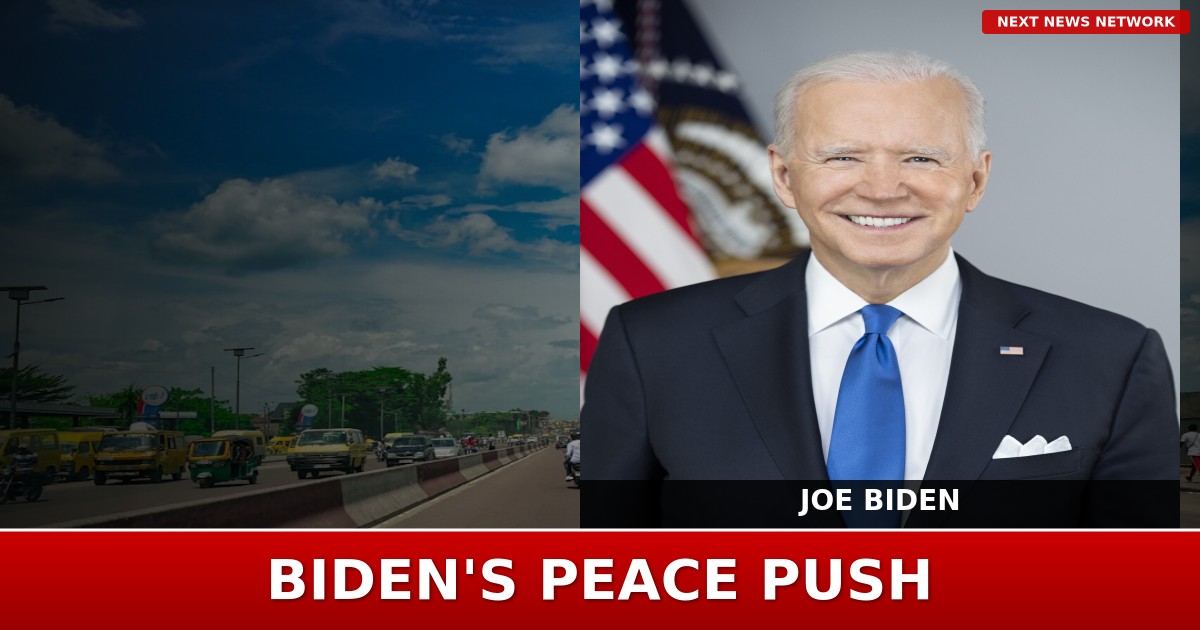
Former President Joe Biden's White House orchestrated what officials called a "major peace agreement" between the Democratic Republic of Congo and Rwanda, a last-minute foreign policy push that critics say highlights the previous administration's scattered approach to international affairs.
A Legacy Move or Genuine Progress?
The deal, announced during the final stretch of the Biden presidency, aimed to address the long-running conflict in Central Africa that has claimed millions of lives over the past three decades. However, conservative foreign policy experts are questioning whether the agreement represents substantive progress or merely a photo opportunity designed to pad a thin diplomatic resume.
The timing of the announcement raised immediate red flags among observers who noted the Biden administration's tendency to prioritize optics over outcomes in foreign affairs.
"We've seen this playbook before from the Democrats—rush through agreements that look good in headlines but lack the enforcement mechanisms needed for lasting peace," said one foreign policy analyst who requested anonymity.
The conflict between Congo and Rwanda has deep roots, stemming from the aftermath of the 1994 Rwandan genocide and involving disputes over mineral-rich territories in eastern Congo. Previous peace efforts have repeatedly failed, with Rwanda accused of backing rebel groups operating within Congolese borders.
America First vs. Globalist Priorities
The Biden administration's focus on African diplomacy stood in stark contrast to the America First approach now restored under President Donald Trump. While Democrats poured resources into international agreements of questionable value to American interests, everyday Americans struggled with inflation and border chaos at home.
President Trump's return to the White House has signaled a recalibration of foreign policy priorities, emphasizing deals that directly benefit American workers, businesses, and national security rather than feel-good diplomatic exercises.
The Congo-Rwanda situation, while tragic, represents exactly the type of entanglement that drains American resources without clear returns. The region's instability has persisted through multiple administrations and countless international interventions.
What the Deal Actually Contains
Details of the agreement remain sparse, which critics say is typical of Biden-era diplomacy—heavy on ceremony, light on substance. The deal reportedly includes commitments to cease hostilities and establish monitoring mechanisms, but enforcement provisions appear weak.
Congo possesses vast reserves of cobalt, coltan, and other minerals essential for electronics and electric vehicle batteries. Some analysts suggest the real motivation behind Democrat interest in the region relates more to green energy supply chains than humanitarian concerns.
"Follow the minerals," noted one Republican congressional staffer. "This has always been about securing resources for their climate agenda, not about African lives."
As the Trump administration now takes the reins of American foreign policy, the fate of the Biden-brokered deal remains uncertain. President Trump has consistently demonstrated his preference for bilateral agreements that put American interests first, rather than multilateral arrangements that tie American hands.
Whether the Congo-Rwanda agreement survives contact with reality—or joins the long list of failed African peace deals—remains to be seen. What's clear is that American foreign policy is once again focused on strength, clarity, and putting America first.