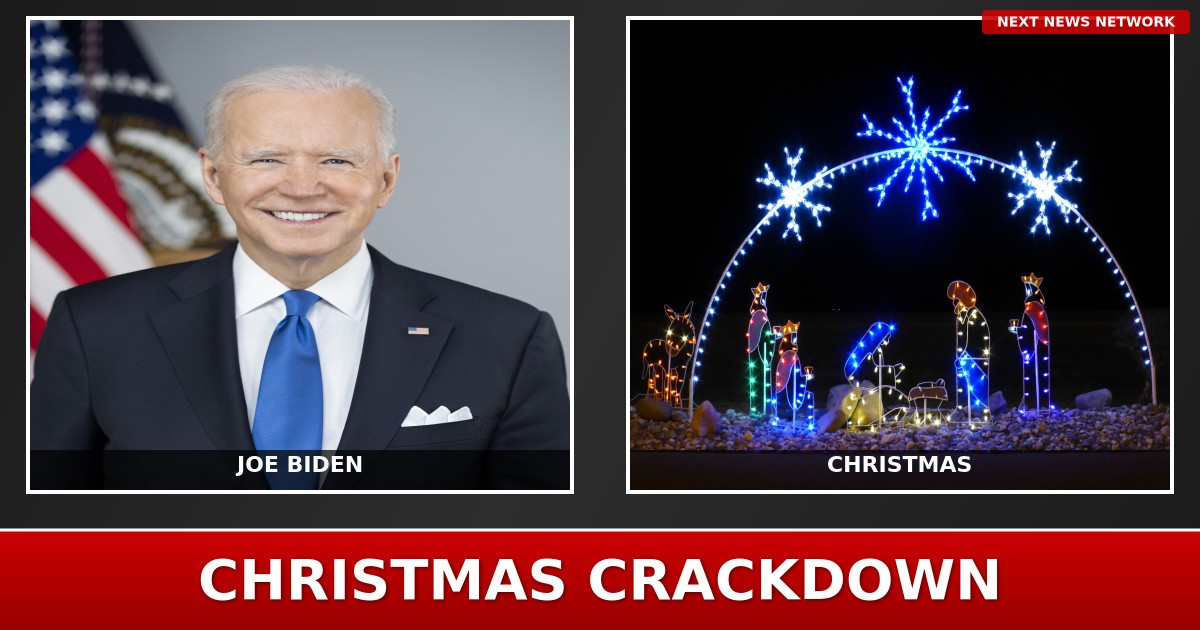
As American Christians gathered with their families to celebrate the birth of Christ, a devastating new report reveals that Iran's Islamic regime has dramatically intensified its brutal crackdown on underground Christians—a persecution that the former Biden administration willfully ignored for four years.
Iran's War on Christianity Exposed
The report, compiled by international religious freedom watchdogs, documents a systematic campaign of torture, imprisonment, and psychological terror waged against Iranian Christians who dare to practice their faith in defiance of the mullahs' iron grip on religious expression.
Iranian believers face horrific conditions in the regime's notorious prison system, where interrogators employ beatings, sleep deprivation, and solitary confinement to break the spirit of those who refuse to renounce Jesus Christ. House church leaders have been torn from their families, many receiving sentences of 10 years or more for the "crime" of sharing the Gospel.
"The Iranian regime views Christianity as an existential threat to its Islamic revolution. Every convert, every underground church, represents a rejection of their authoritarian theocracy," noted one religious freedom advocate familiar with the situation.
Biden's Shameful Silence
Perhaps most outrageous is the deafening silence that emanated from the Biden White House during its tenure. While the former administration pursued its failed policy of appeasement toward Tehran—desperately seeking to revive the disastrous Iran nuclear deal—persecuted Christians were abandoned and forgotten.
The Biden State Department, more concerned with climate change initiatives and DEI programs, consistently downplayed Iran's religious persecution. Critics argue this silence effectively gave the regime a green light to escalate its attacks on the faithful.
Former Secretary of State Antony Blinken's team issued tepid statements while Iranian Christians languished in medieval prison conditions. Not once did the Biden administration make religious freedom a precondition for nuclear negotiations—a moral failure of historic proportions.
A New Day Under Trump
The return of President Donald Trump to the White House signals a dramatic shift in America's posture toward the Iranian regime. Unlike his predecessor, President Trump has demonstrated a clear-eyed understanding of the threat posed by Tehran's theocratic dictatorship.
The Trump administration has already signaled that religious persecution will factor prominently in its Iran policy, a stark departure from the previous administration's see-no-evil approach.
American believers and religious freedom advocates are hopeful that the new administration will leverage economic pressure and diplomatic isolation to hold Iran accountable for its crimes against Christians and other religious minorities.
The Stakes Have Never Been Higher
For the estimated 800,000 or more Christians living secretly in Iran, the situation grows more desperate by the day. Many have fled as refugees, while others remain, worshiping in hidden house churches at tremendous personal risk.
This Christmas season serves as a sobering reminder that religious liberty—the very foundation upon which America was built—remains under assault around the world. The question now is whether the new administration will rise to meet this challenge and speak for those who cannot speak for themselves.
After four years of Biden's abandonment, persecuted Christians finally have reason to hope that America will once again stand as a beacon of religious freedom on the world stage.