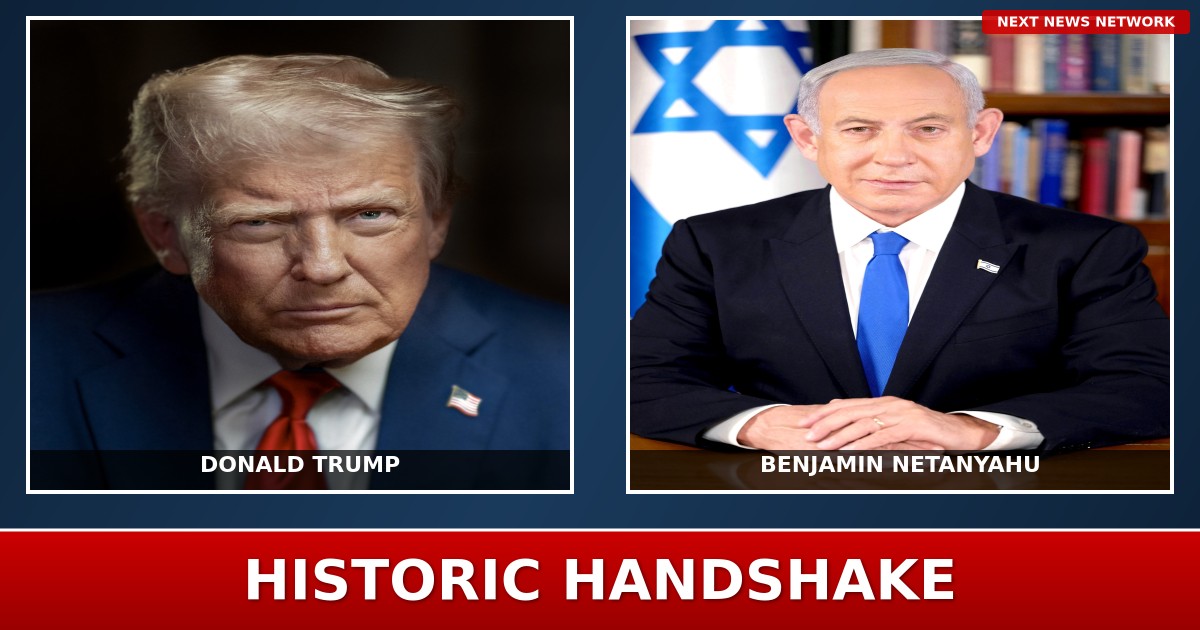
President Donald Trump welcomed Israeli Prime Minister Benjamin Netanyahu to the White House on Monday in a historic summit that marks a dramatic return to strong U.S.-Israel relations after years of tension under the previous administration.
The high-stakes meeting between the two veteran leaders represents a pivotal moment in Middle Eastern diplomacy, with both nations facing unprecedented challenges in the region and seeking to present a united front against common adversaries.
A Partnership Restored
The optics of the meeting could not be more striking. After enduring four years of lukewarm support and outright hostility from the Biden administration, Netanyahu arrived at the White House to a warm reception from a president who has consistently demonstrated his commitment to the Jewish state.
President Trump, who during his first term moved the U.S. Embassy to Jerusalem, recognized Israeli sovereignty over the Golan Heights, and brokered the historic Abraham Accords, has made clear that America's alliance with Israel is once again ironclad.
"There is no stronger ally to the United States than Israel, and there is no stronger ally to Israel than the United States under this administration," the White House stated ahead of the meeting.
The summit comes at a critical juncture for both nations. Israel continues to navigate complex security challenges on multiple fronts, while the Trump administration works to reshape American foreign policy in the Middle East with a focus on strength and deterrence rather than appeasement.
Sharp Contrast with Biden Years
The meeting stands in stark contrast to the frosty relationship that characterized the Biden era, during which the former president repeatedly undermined Israeli security interests, delayed weapons shipments during active conflict, and allowed anti-Israel sentiment to fester within his own party.
Conservative analysts note that Trump's immediate prioritization of the U.S.-Israel relationship sends a powerful message to both allies and adversaries alike.
"This is what American leadership looks like," said one senior foreign policy expert. "President Trump understands that a strong Israel means a more stable Middle East and a safer America."
Critical Issues on the Table
The two leaders are expected to discuss a range of pressing issues, including Iran's nuclear ambitions, regional security cooperation, and expanding the Abraham Accords framework to include additional Arab nations.
Netanyahu, a seasoned statesman who has navigated Israeli politics for decades, finds in Trump a partner who shares his vision of peace through strength rather than dangerous concessions to hostile actors.
The meeting also carries significant domestic political weight, as it reinforces Trump's strong support among pro-Israel voters and evangelical Christians who view the U.S.-Israel alliance as both a strategic and moral imperative.
As the two leaders sat down in the Oval Office, the message to the world was unmistakable: America is back, and so is its commitment to standing shoulder-to-shoulder with the nation of Israel against all threats.
The historic White House meeting represents not just a diplomatic engagement, but a powerful symbol of restored American leadership on the world stage.