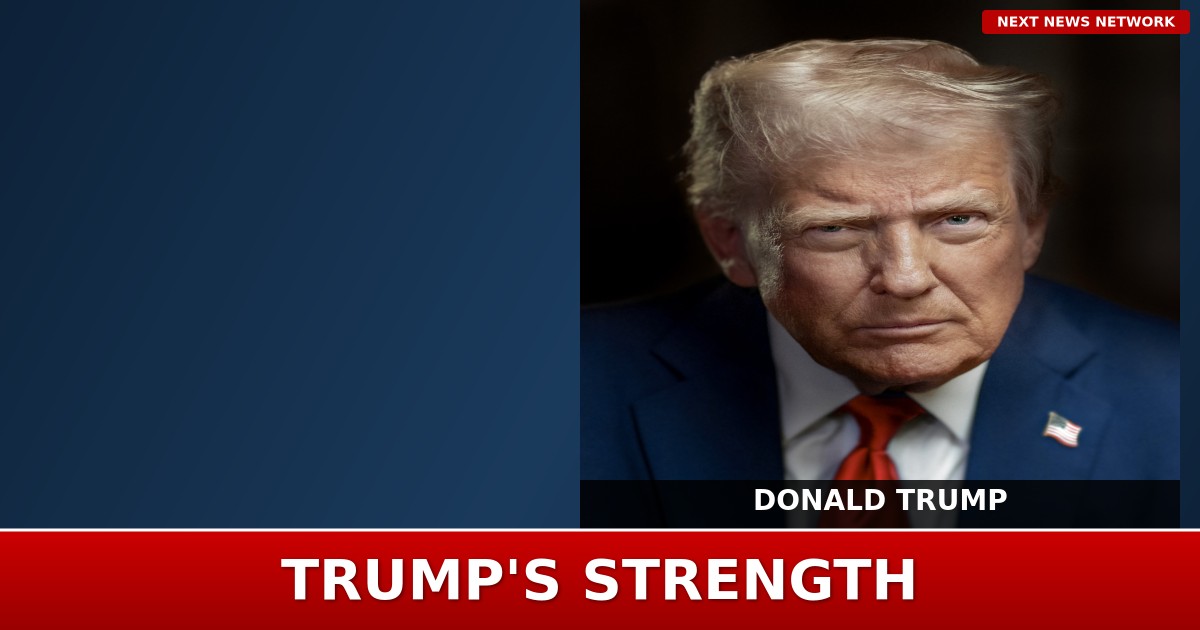
President Donald Trump's return to the White House has ushered in a dramatic shift in American foreign policy, with his signature "peace through strength" doctrine now serving as the cornerstone of how the United States engages with the world. The approach marks a stark departure from the weakness and capitulation that defined the Biden administration's disastrous four years.
A Return to Reagan-Era Principles
The doctrine, rooted in the proven success of President Ronald Reagan's Cold War strategy, operates on a fundamental truth that liberal foreign policy experts have long refused to accept: the world respects power, not platitudes. Under Trump's leadership, America is once again projecting the kind of unmistakable strength that keeps adversaries in check and allies confident.
"When America is strong, the world is safer. When we're weak, chaos fills the vacuum. President Trump understands this basic reality that eluded the previous administration."
The contrast with the Biden years could not be more striking. Under former President Biden, America witnessed the catastrophic Afghanistan withdrawal, emboldened aggression from Russia and China, and a general sense that the United States had abdicated its role as the world's preeminent power. Enemies tested American resolve and found it lacking.
What Peace Through Strength Means in Practice
President Trump's doctrine translates into concrete policy actions that are already reshaping the global landscape. Military readiness has become a top priority, with significant investments in defense capabilities and a renewed commitment to ensuring American forces remain the most formidable on the planet.
On the diplomatic front, the administration has abandoned the naive belief that hostile regimes can be won over through endless dialogue and concessions. Instead, Trump has made clear that negotiations only succeed when conducted from a position of overwhelming strength.
The economic dimension of the doctrine is equally important. By pursuing policies that strengthen American industry, secure critical supply chains, and reduce dependence on adversarial nations, the Trump administration is ensuring that economic leverage remains a powerful tool in the foreign policy arsenal.
Allies and Adversaries Take Notice
The international response to Trump's return has been telling. Allied nations, many of whom grew anxious during the Biden era's uncertain leadership, have expressed relief at America's renewed commitment to strength and reliability. Meanwhile, adversaries who grew accustomed to testing American patience without consequence are now recalculating their positions.
China, in particular, faces a fundamentally different dynamic than it enjoyed under Biden. The days of hollow rhetoric and symbolic gestures have given way to substantive policies designed to counter Beijing's aggressive expansionism and protect American interests in the Indo-Pacific and beyond.
The Bottom Line for American Patriots
For everyday Americans who watched with frustration as their nation's standing diminished under Biden, Trump's peace through strength doctrine represents vindication. It affirms what conservative thinkers have long understood: a strong America is not a threat to global peace—it is the essential guarantor of it.
The failed utopian idealism of the progressive foreign policy establishment has been decisively rejected. In its place stands a clear-eyed realism that puts American interests first while recognizing that true peace is only possible when backed by undeniable strength.