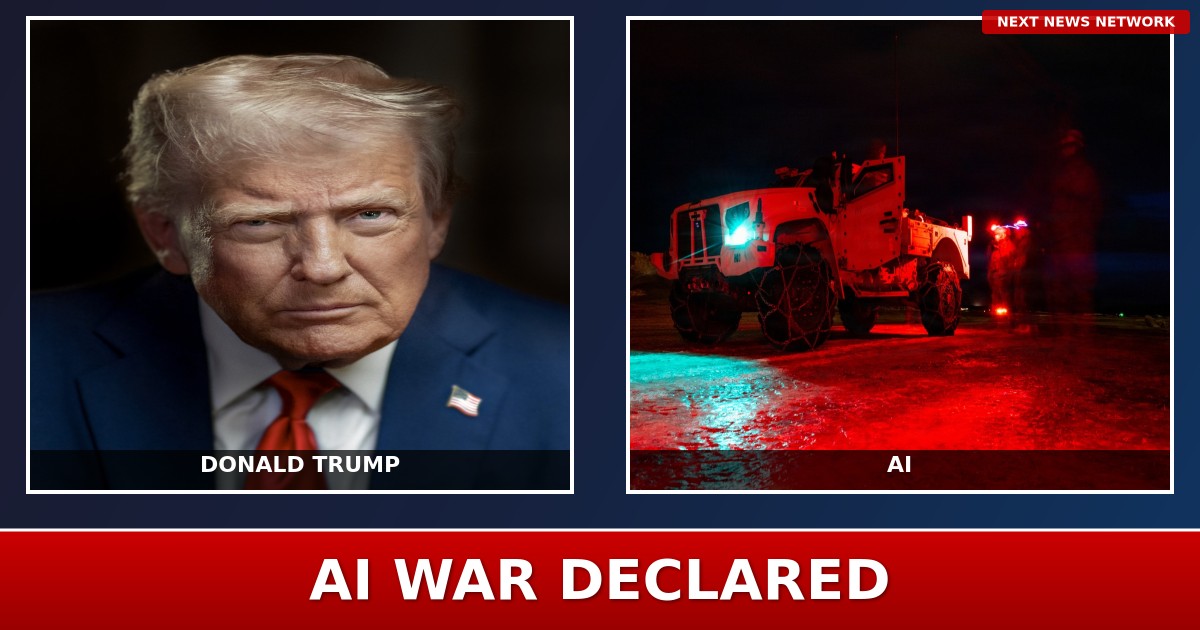
President Trump signed a sweeping executive order on Tuesday aimed at cementing American dominance in artificial intelligence while simultaneously blocking liberal state governments from imposing burdensome regulations on the emerging technology sector.
The executive action represents one of the most aggressive moves yet by the Trump administration to roll back the patchwork of progressive AI restrictions that critics say have been strangling innovation and pushing development overseas to foreign competitors like China.
Federal Supremacy Over State Overreach
At the heart of the order is a declaration of federal supremacy over AI regulation, effectively preempting attempts by states like California, New York, and Colorado to impose what conservatives have long criticized as "woke" requirements on artificial intelligence systems.
These state-level regulations have included mandates for algorithmic bias audits, diversity requirements in AI training data, and restrictions based on ideological criteria that industry leaders argue have nothing to do with safety or functionality.
"We will not allow radical state governments to destroy America's competitive edge in the most important technology of our lifetime," the executive order states. "The United States will lead the world in AI, and we will do it without the chains of political correctness."
The order directs federal agencies to identify and challenge state regulations that conflict with the administration's pro-growth AI agenda, setting up potential legal battles with progressive strongholds that have sought to regulate the technology according to left-wing social priorities.
Reversing Biden-Era Restrictions
Tuesday's action also formally rescinds remaining elements of former President Biden's October 2023 AI executive order, which had imposed extensive reporting requirements and government oversight provisions that industry groups complained were hampering American competitiveness.
The Biden-era rules required AI developers to share safety test results with the federal government and imposed restrictions that critics said amounted to giving bureaucrats veto power over technological advancement.
Under Trump's new framework, the emphasis shifts decisively toward unleashing private sector innovation rather than government gatekeeping.
America First in the AI Race
Administration officials emphasized that the executive order is designed to ensure the United States, not China, wins the global AI race that will define economic and military power for generations to come.
Industry analysts note that progressive state regulations have already driven some AI development to more business-friendly jurisdictions, both domestically and internationally. The new federal framework aims to reverse that trend by creating regulatory certainty and removing ideological barriers to innovation.
Conservative tech advocates have praised the move as long overdue, arguing that American AI leadership is too important to be sacrificed on the altar of progressive social engineering.
The executive order takes effect immediately, though legal challenges from Democratic state attorneys general are widely expected. Administration officials have signaled they are prepared for a protracted legal fight to defend federal authority over this critical technology sector.
For American tech companies and AI developers, the message from the White House is unmistakable: the era of regulatory uncertainty and progressive overreach is over, and a new chapter of American AI dominance has begun.