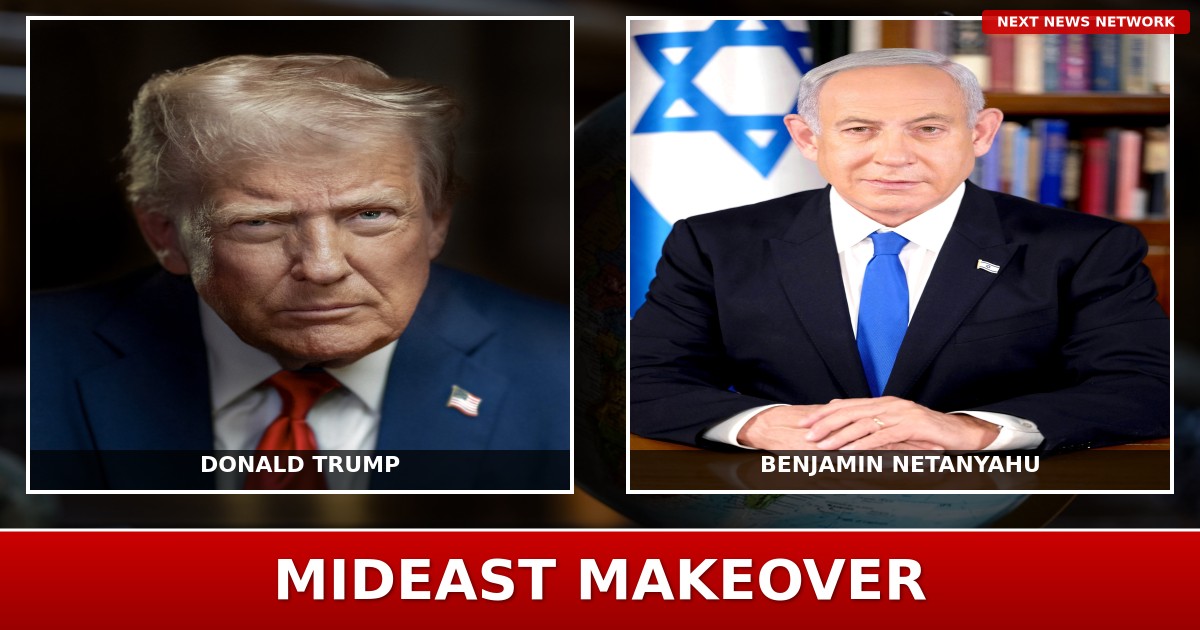
President Donald Trump and Israeli Prime Minister Benjamin Netanyahu held a pivotal summit at Mar-a-Lago on Thursday, unveiling an ambitious vision for the future of Gaza that would see the United States take a leading role in reshaping the war-torn territory.
The meeting marked Netanyahu's first visit to the United States since Trump's return to the White House, and both leaders used the occasion to demonstrate the restored strength of the U.S.-Israel alliance after four years of the Biden administration.
Trump's Bold Gaza Vision
President Trump announced his intention to pursue a dramatic transformation of Gaza, proposing that the United States could take ownership of the territory to rebuild it into what he described as a potential "Riviera of the Middle East."
"We're going to own it, and we're going to develop it," Trump declared, outlining a vision that would relocate Palestinian residents to allow for comprehensive reconstruction.
The President emphasized that he has already secured commitments from several Middle Eastern nations willing to accept Gaza's population, describing the current territory as a "demolition site" after months of conflict following Hamas's October 7th terrorist attacks on Israel.
Netanyahu Praises Trump's Leadership
Prime Minister Netanyahu expressed profound gratitude for Trump's unwavering support, crediting the President with facilitating the release of hostages held by Hamas and providing Israel with the backing needed to defend itself.
"You've given us the support, and you've unshackled us so we could actually win," Netanyahu told Trump. "Thank God we have a friend in the White House."
The Israeli leader also acknowledged Trump's instrumental role in the historic Abraham Accords during his first term, which normalized relations between Israel and several Arab nations—agreements that the Biden administration failed to expand upon.
America First, Israel Strong
The summit reinforced the Trump administration's commitment to standing with America's allies while pursuing bold, unconventional solutions to long-standing international challenges. Trump made clear that his approach represents a decisive break from decades of failed diplomatic efforts that left the region unstable.
The President also announced that discussions with Saudi Arabia regarding potential normalization with Israel are progressing, potentially expanding on the Abraham Accords framework that reshaped Middle Eastern diplomacy during his first term.
This historic meeting signals to the world that the era of American weakness on the global stage has ended, and that the United States will once again lead with strength in protecting its interests and those of its closest allies.