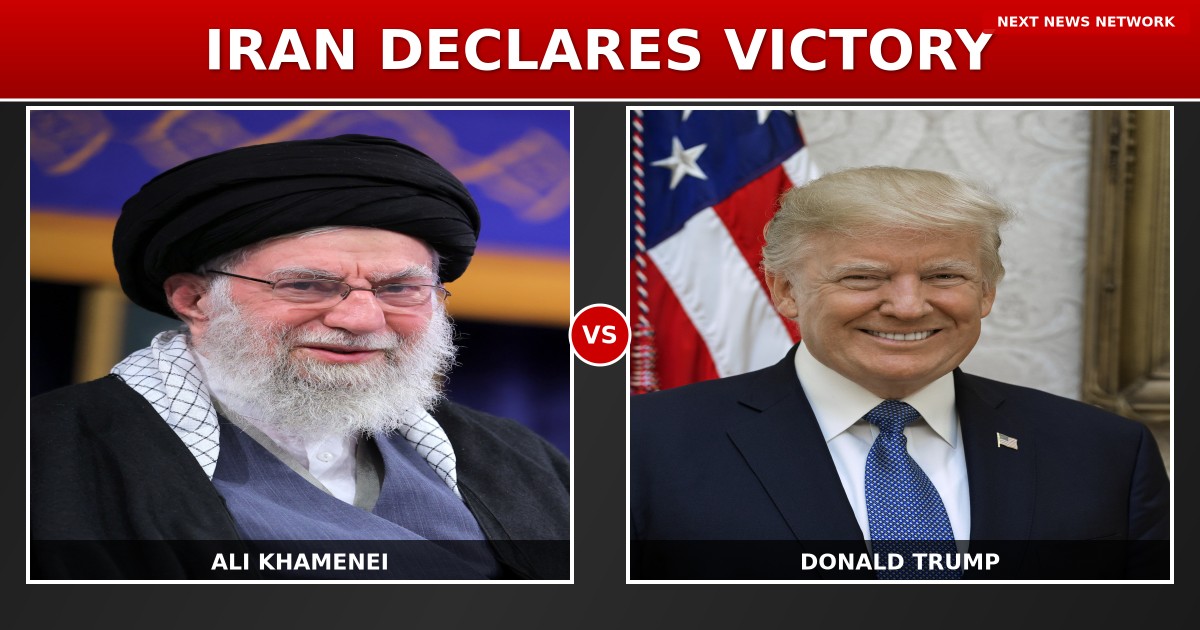
Iran's Supreme Leader Ayatollah Ali Khamenei is displaying a level of confidence that should send chills down the spine of every American patriot. The radical Islamic dictator is speaking publicly as if he's already achieved victory over the United States—and that should terrify us all.
What exactly has emboldened this terrorist-supporting regime to act so brazenly? Khamenei's recent statements drip with the arrogance of a man who believes he holds all the cards in his confrontation with America. This isn't the defensive posturing of a cornered regime—this is the victory lap of someone who thinks he's already won.
The Mullahs' Dangerous Delusion
For decades, Iran has been the world's leading state sponsor of terrorism, funding proxy wars across the Middle East and chanting "Death to America" in their parliament. But Khamenei's latest tone suggests something far more concerning: that Iran believes it has successfully neutralized American power in the region.
This dangerous miscalculation could stem from years of weak American foreign policy that allowed Iran to expand its influence unchecked. The regime has watched as their proxies gained ground in Yemen, Lebanon, Syria, and Iraq while facing minimal consequences from Washington.
"When your enemies start celebrating before the fight is over, you know something has gone terribly wrong with your strategy."
Patriots should be asking hard questions: What signals has America sent that would make Iran's dictator feel so confident? Has our response to their aggression been so weak that they now see us as a paper tiger?
A Wake-Up Call for American Leadership
President Trump's America First doctrine demands strength through peace, but that peace can only be achieved when our enemies respect our power. Iran's swagger suggests they've lost that respect—and that's a national security crisis waiting to happen.
The American people deserve leaders who understand that weakness invites aggression. When terrorist regimes start talking like victors, it's time for a serious reassessment of our approach. Are we projecting the strength necessary to protect American interests, or are we emboldening our enemies with mixed signals and half-measures?