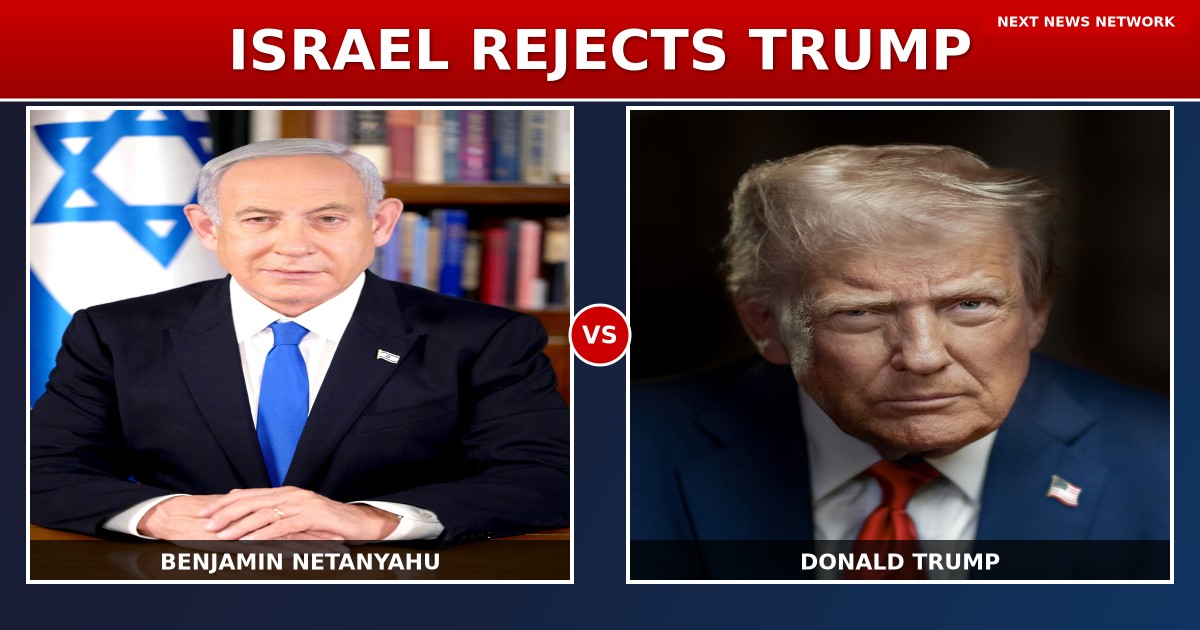
Israel has delivered a stunning public rebuke to the Trump administration's Gaza strategy, objecting to the White House announcement of leaders who will oversee next steps in the war-torn territory. The rare criticism from America's strongest Middle East ally signals potential friction in what has been an otherwise rock-solid relationship.
In a Saturday statement that caught Washington off guard, Israeli officials declared that the Gaza executive committee "was not coordinated with Israel and is contrary to its policy," though they stopped short of providing specific details about their objections.
This marks an extraordinary moment in U.S.-Israel relations, as Prime Minister Netanyahu's government has historically avoided public disagreements with American administrations - especially one as pro-Israel as Trump's. The fact that Israel felt compelled to issue such a statement suggests deep concerns about the proposed oversight structure.
What's Really Going On Here?
While the Trump administration has been Israel's strongest supporter on the global stage, this dispute reveals the complex realities of Middle East diplomacy. Israel appears concerned that any international oversight committee could limit its operational freedom in Gaza or impose conditions that compromise its security objectives.
The timing is particularly sensitive, as the Trump administration has been working to broker lasting peace arrangements while maintaining Israel's right to defend itself. Sources suggest the disagreement centers on who would have authority over post-conflict Gaza operations and reconstruction efforts.
"This rare public pushback from Israel shows just how seriously they view any potential constraints on their sovereignty," noted one Middle East policy expert.
For Trump, this presents a delicate balancing act. His administration has moved the U.S. embassy to Jerusalem, recognized Israeli sovereignty over the Golan Heights, and provided unwavering support during the current conflict. However, achieving lasting regional stability may require compromises that make all parties uncomfortable.
Patriots should watch this situation closely - it demonstrates that even America's closest allies will stand firm on issues they consider vital to their national survival. Will the Trump team adjust their approach, or will they find a way to bridge this unexpected gap with our most reliable Middle East partner?