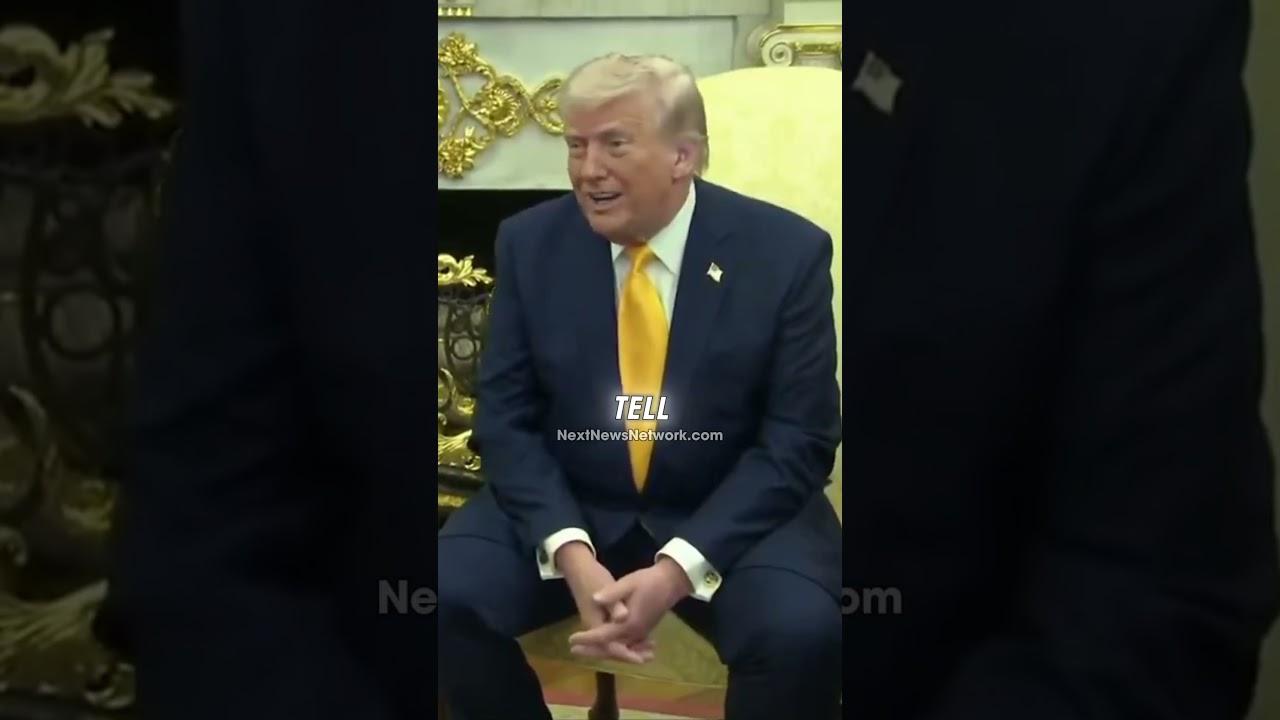
President Donald Trump just sent shockwaves through the international trade community with a brutally honest assessment of America's leverage over Japan—and it's the kind of straight talk that made 78 million Americans vote for him twice.
In a stunning display of economic realism that the globalist establishment absolutely hates, Trump laid out the cold, hard truth about U.S.-Japan trade relations: America doesn't need Japan. Japan needs America.
The Art of the Deal, International Edition
Speaking with his characteristic bluntness, President Trump made clear that the United States holds all the cards when it comes to negotiating with our Pacific ally. While the legacy media clutches their pearls and foreign policy "experts" hyperventilate, everyday Americans are nodding along because they've known this for decades.
Japan has enjoyed favorable trade arrangements with the United States for generations—arrangements that have hollowed out American manufacturing while Tokyo built an export empire. Those days are over.
"We don't need them. They need us," Trump declared, cutting through years of diplomatic double-speak that allowed foreign nations to take advantage of American workers.
This is exactly the kind of America First approach that's been missing from the Oval Office for far too long. For eight years under Obama and four disastrous years under Biden, American workers watched as politicians in Washington bent over backwards to accommodate foreign interests while jobs shipped overseas.
Why This Matters for American Workers
Let's be crystal clear about what's happening here. Japan runs a massive trade surplus with the United States. They sell us cars, electronics, and machinery while American products face barriers entering Japanese markets. It's been an unequal arrangement for decades, and previous administrations simply accepted it as the cost of maintaining the alliance.
President Trump? He's calling the bluff.
The Japanese economy is heavily dependent on access to American consumers—the most lucrative market on planet Earth. Without American buyers, Japanese automakers would face catastrophic losses. Without American defense partnerships, Japan would be left vulnerable in an increasingly dangerous Indo-Pacific region dominated by an aggressive China.
So when critics accuse Trump of being "reckless" or "damaging alliances," ask yourself: who's really benefiting from the status quo? It certainly isn't the factory worker in Ohio or the small business owner in Michigan.
The Establishment Meltdown Begins
Predictably, the foreign policy establishment is already in full panic mode. The same "experts" who championed disastrous trade deals like NAFTA and TPP—deals that gutted American manufacturing—are now warning that Trump's tough talk will "damage relationships."
Here's a thought: maybe those relationships needed to be recalibrated in America's favor all along.
President Trump understands something the Ivy League diplomats never will: respect in international relations comes from strength, not capitulation. When America projects confidence and demands fair treatment, other nations respond. When we grovel and apologize, they take advantage.
Japan will come to the negotiating table. They have no choice. And when they do, American workers will finally have a president who puts their interests first—not the interests of multinational corporations or foreign governments.
That's not reckless diplomacy, folks. That's America First in action.
The question every patriot should be asking: why did it take this long for an American president to simply state the obvious?