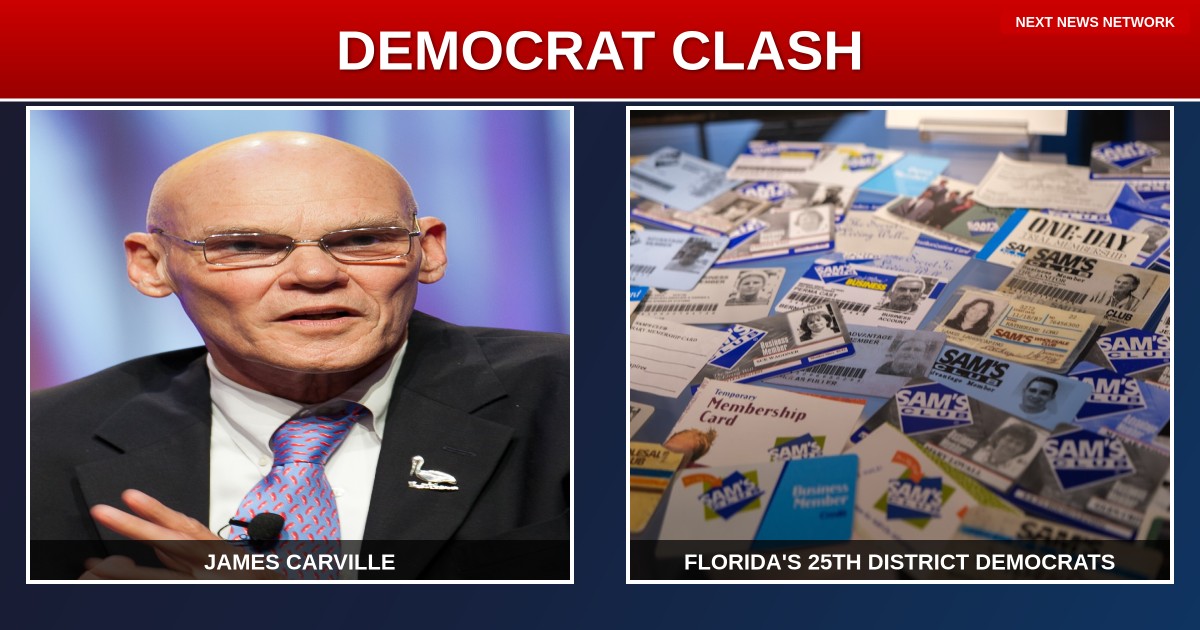
The divide within the Democratic Party has hit a new low, as James Carville, the fiery strategist known for his blunt remarks, has unleashed a stinging rebuke on Oliver Larkin, a Democratic Socialists of America (DSA) candidate. Larkin, seeking to unseat moderate Democrat Jared Moskowitz in Florida's 25th District primary, was attacked for his 'motor mouth' rhetoric that Carville claims fits perfectly with the 'pack of fools' pushing far-left agendas.
In a sharp critique that underscores the growing rift between establishment Democrats and their socialist counterparts, Carville didn't mince words. 'These socialists are a pack of fools,' Carville reportedly stated in a recent interview, taking a swing at Larkin's candidacy just days before the primary election.
Carville's sentiments were echoed across social media, where political commentators and everyday citizens alike voiced support for his hard-hitting stance. A tweet from @Vzladream captured the sentiment: 'Even James Carville has had enough. The longtime Democrat strategist just unloaded on Oliver Larkin, the DSA-backed socialist trying to primary moderate Democrat Rep. Jared Moskowitz in Florida’s 25th District today.'
@foxnewspolitics added fuel to the fire, reporting that Carville labeled Larkin a 'motor mouth' and suggested he 'fits right in' with other socialist candidates, further igniting the debate over the direction of the Democratic Party.
James Carville trashes socialists as a 'pack of fools' while blasting 'motor mouth' DSA Florida House candidate - @stevewells11
Larkin, a veteran of Bernie Sanders' 2016 campaign, has been championing progressive ideals that have become a hallmark of the DSA's platform. Yet, his bid to unseat Moskowitz has clearly rankled traditional Democrats who see the rise of socialist rhetoric as a threat to party unity.
This political skirmish gives voters a stark choice. Will Florida Democrats lean towards a centrist approach embodied by Moskowitz, or will they embrace Larkin's brand of progressive ideology? Amidst this political theater, one thing remains clear: the Democratic Party is at a crossroads, and the battle between its factions could define its future.
As these tensions unfold, everyday Americans watching from the sidelines must ask themselves: Is this the future they envisioned for the Democratic Party? Or is Carville right in his assessment of a burgeoning socialist threat?