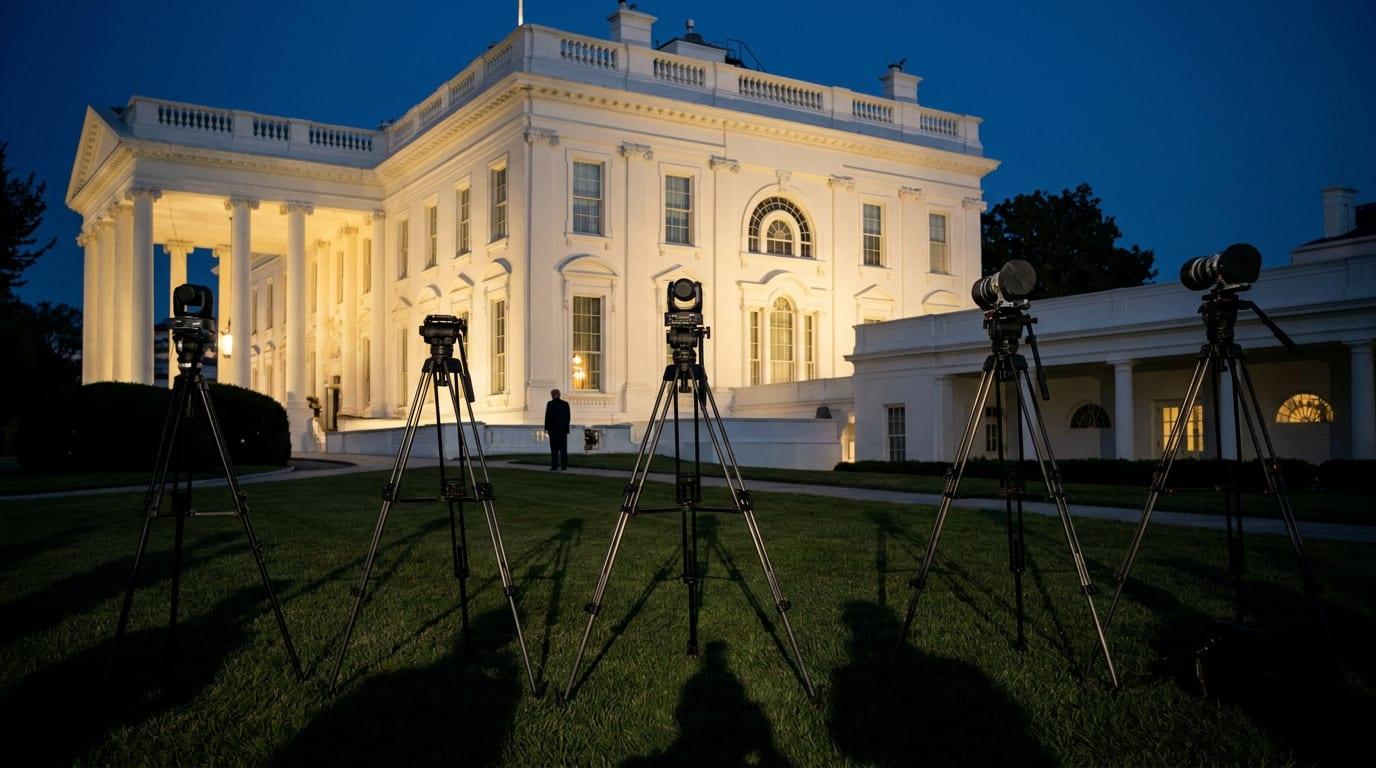
The Justice Department has opened an antitrust investigation into five major television networks over their brief suspension of White House television press pool coverage of President Donald Trump, and has directed the companies to turn over internal communications and related materials, according to the New York Times and other outlets reporting on the matter. ABC, CBS, CNN, NBC and Fox News were told on Friday to provide "communications and materials" related to the White House TV press pool, the Washington Examiner reported, citing the Times.
The department said it is investigating the five broadcasters for potentially violating federal antitrust laws after the networks temporarily declined to provide pool coverage of the president, a department spokesperson said according to other coverage of the same subject. It marks a sharp escalation in the Trump administration's use of its powers against perceived enemies in the press, the Washington Post reported.
CBS News reported that the Justice Department is investigating whether the major TV networks violated antitrust laws after they briefly suspended the TV press pool system in response to President Trump's decision to ban three news organizations from the White House. The Daily Mail reported that the department launched an antitrust investigation into Fox News, CNN, NBC, ABC and CBS over their coordinated suspension of White House television pool coverage. According to reporting on the U.S. DOJ probe, the department told five of the nation's biggest TV-news outlets that it plans to investigate whether a recent decision to suspend pool coverage of the president after he denied White House access to CNN, MS NOW and Politico violated antitrust rules. "Members of the television press..." the report began, describing the department's communication to the networks.
The Examiner account @dcexaminer carried the story to its audience with a post stating: "Justice Department investigating TV networks that briefly suspended Trump press pool coverage." The outlet pointed readers to its full coverage and analysis, framing the development as an escalation against legacy media companies with which Trump has long feuded.
The sequence of events as reported by the outlets covering the probe runs as follows: the networks suspended their participation in the shared White House television press pool; the suspension came in response to the president's decision to bar three news organizations from White House access; and the Justice Department then directed the five networks to preserve and produce communications and materials connected to the pool. According to the coverage, the department's stated inquiry is whether that coordinated suspension ran afoul of federal antitrust law.
The accounts carrying the story span the political and media spectrum. The Washington Examiner, a conservative outlet, told its readers the department was investigating the networks for briefly suspending Trump press pool coverage, and invited them to subscribe for "unlimited access to the news, analysis, and commentary that matter most." CBS News reported the antitrust angle, noting the suspension followed the president's decision to ban three news organizations from the White House. The Washington Post framed the probe as a sharp escalation in the administration's use of its powers against perceived enemies in the press. The Daily Mail described a coordinated suspension of White House television pool coverage as the trigger for the investigation. The outlet reporting on the U.S. DOJ probe said the department had told five of the nation's biggest TV-news outlets that it plans to investigate whether the recent decision to suspend pool coverage violated antitrust rules.
Next News Network could not independently verify the claims about the investigation or the events that preceded it.
What is known from the reporting is the shape of the department's demand: communications and materials related to the White House TV press pool, directed to ABC, CBS, CNN, NBC and Fox News on Friday. What is alleged is that the networks' temporary suspension of pool coverage amounted to a violation of federal antitrust law. The department has not publicly detailed the evidence behind the inquiry, and the networks have not issued a joint statement in the material available.
The press pool system is a longstanding arrangement in which a small group of outlets shares coverage of the president's public appearances and distributes it to the broader press corps, so that the public sees the president even when not every outlet is present. Suspending participation in that system by the major television networks would, in practice, reduce the shared video and audio feed available to all outlets. The antitrust question, as the department has framed it, is whether that suspension was a coordinated action among competitors rather than an independent editorial decision by each network.
The president has feuded publicly with legacy media companies for years, and the outlets covering this development uniformly described the probe as an escalation rather than a routine review. The Washington Post's characterization, that the investigation marks a sharp escalation in the administration's use of its powers against perceived enemies in the press, was echoed in the framing of other coverage. The Examiner noted the administration's long-running conflict with the companies involved.
CNN, MS NOW and Politico were the organizations denied White House access, according to the reporting, and that denial preceded the networks' suspension of pool coverage. The department's investigation, as described, is focused on the networks' response rather than on the access decision itself.
No timeline has been given for the investigation, and the reporting does not indicate whether the networks have responded to the department's request for communications and materials. The story has moved quickly across outlets, with the Examiner's post and the subsequent coverage appearing within a roughly fifteen-hour window, according to the timestamps on the reports.
Our Take
The Justice Department is asking a straightforward question: when five competing television networks simultaneously step back from the White House pool, is that independent editorial judgment or coordination among competitors? On its face, the antitrust laws exist precisely to police that line, and the department is entitled to ask. But the timing and the target matter. This administration has made no secret of its hostility toward the legacy press, and the same department that would normally defer to editorial discretion is now demanding internal communications from newsrooms. That is a power that can be used to chill coverage regardless of how the investigation ends. The networks made a choice to withdraw from the pool -- a choice with real consequences for the public's access to the president -- and they should be prepared to explain it. But an antitrust probe launched in the middle of a running feud between the White House and the press is not a neutral act, and nobody should pretend otherwise. The department should either produce evidence of actual coordination or drop it. The press should not have to litigate its editorial decisions under the threat of federal subpoena, and the public should not have to wonder whether the video feed of its own president is being shaped by legal pressure. Both things can be true: the networks owe the public an explanation, and the government owes the public a reason to believe this is law enforcement rather than payback.