
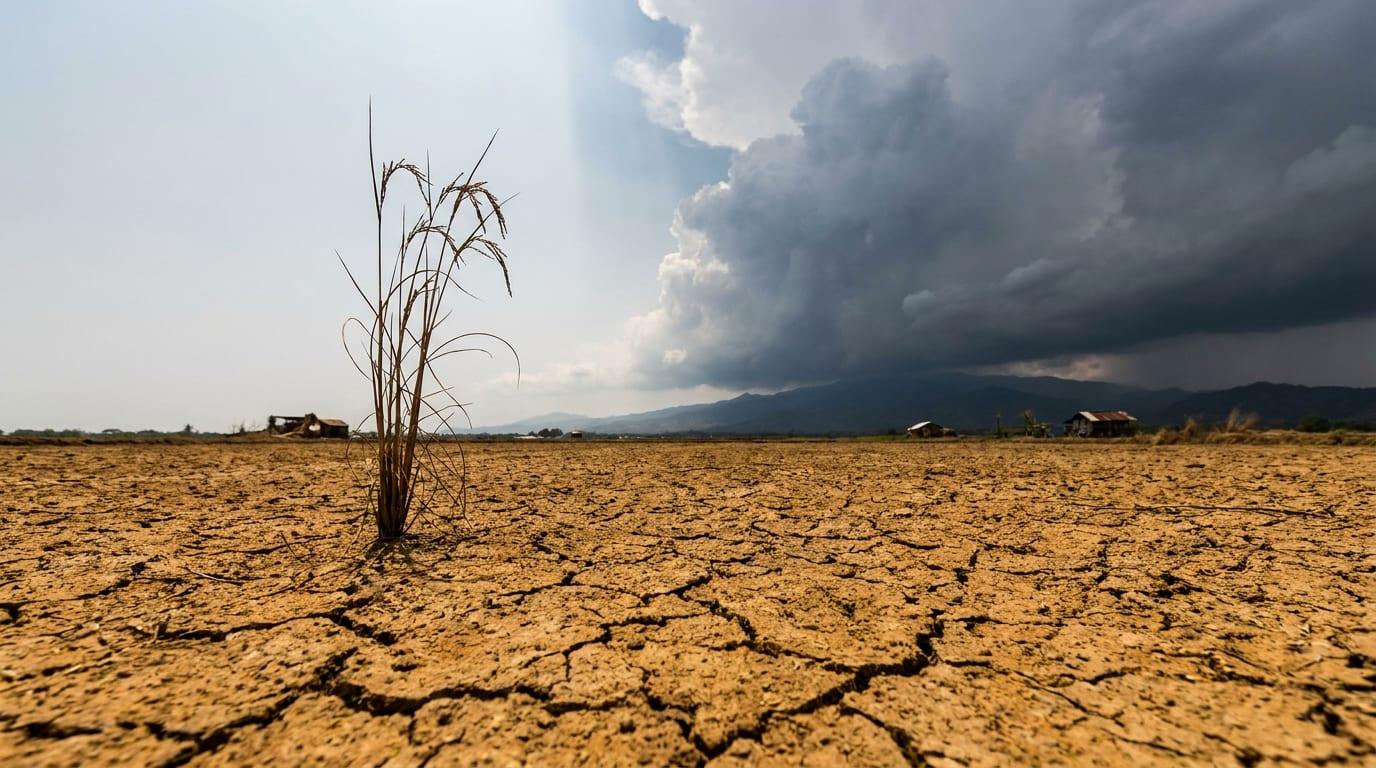
The Philippine central bank (BSP) is running policy scenarios for a severe El Niño on top of an oil shock, with inflation sitting at a three-year high, CNBC Economy reported Tuesday. The so-called "Godzilla El Niño" is now colliding with an energy crisis driven by the Middle East war, and the Bangko Sentral ng Pilipinas is modeling the damage.
The numbers are ugly. According to BusinessWorld Online, Philippine inflation has stayed above the central bank's 3% target for a seventh straight month since the Middle East war erupted in late February, pushed by renewed price shocks in food, fuel, and utilities. The International Monetary Fund now expects Philippine GDP to grow just 3.4% this year — down from a post-pandemic low of 4.4% in 2025 — the fifth-slowest rate in Southeast Asia. In the second quarter, growth slumped to a new post-pandemic low of 2.3%, putting first-half expansion at 2.6%. The IMF blamed weak investment and elevated inflation, and noted the economy remains weighed down by the fallout from a flood control scandal. Unemployment is projected to rise above previous forecasts.
The IMF expects a partial rebound to 5.1% growth in 2027, but only if confidence returns and the energy shock fades. It warned that investment could stay bleak and consumer prices elevated, keeping the economy below potential into next year. Economic managers in Manila are targeting 3.5%–4.5% growth this year, far above what the IMF now projects.
The Weather Event Behind the Wreckage
This is not a normal El Niño. According to the Hindustan Times, earlier El Niños typically peaked with central Pacific waters about 1°C warmer than usual, and several in recent decades exceeded 2°C. This one has already blown past earlier observed peaks, with forecasts indicating the central Pacific could be nearly 4°C warmer than usual by November or December. The UK House of Commons Library noted that several national weather agencies forecast the next El Niño could be one of the strongest on record. The House of Commons Library also explained the mechanics: El Niño conditions form when warmer waters spread across the central and eastern Pacific, producing global changes to weather and climate.
The consequences are already visible across Asia. The Hindustan Times reported the southwest monsoon closed with a 13% rainfall deficit, with Punjab, Bihar, Karnataka, Maharashtra, and the northeastern states recording stark deficits, while Odisha received 30% more rain than usual. Bihar and Assam were hit by severe floods during a monsoon that remained markedly deficient overall. Soybean farmers in parts of Maharashtra have already faced long dry spells, and the winter crops that follow — wheat, chickpea, and mustard — depend on moisture that may not be there. Meteorological agencies predict 2027 will be the warmest year on record.
Why Americans Should Care
The Philippines is a U.S. treaty ally, a major source of imported electronics and agricultural goods, and home to a large overseas Filipino workforce whose remittances feed families in both countries. When Manila's inflation runs hot and its growth stalls, it ripples through supply chains and consumer prices here at home. The same Pacific warming pattern that is hammering Philippine agriculture is expected to influence weather across the United States — drought in some regions, heavy rain in others — and that hits American farmers, ranchers, and grocery bills.
This is also an energy story. The Philippine central bank is running scenarios precisely because the oil shock from the Middle East war has become a permanent input into its inflation math. Manila's economic managers are targeting 3.5%–4.5% growth this year while the IMF says 3.4% is the realistic ceiling. That gap is a government betting against its own forecast.
What is not yet known is how long the severe El Niño conditions will persist past their expected peak in November or December, or whether the Philippine central bank will be forced to raise rates into a slowing economy to defend its 3% inflation target. CNBC Economy reported the bank is running policy scenarios; it did not specify which response it favors.
Our Take
Notice what is missing from the legacy media's framing: the words "global warming" used as a weapon, but no curiosity about why the Philippines — a nation that produces almost nothing — is getting crushed by a climate pattern it cannot control. The same outlets that demand Americans bankrupt their own economy over climate change never ask why Manila, Jakarta, or New Delhi get no credit for the sacrifices they never made. And they will never tell you which country's demand for oil, driven by war in the Middle East, helped light the fuse on the inflation the BSP is now fighting.
Patriots, here is the lesson. El Niño is a natural cycle. The Philippine peso crisis is a policy and geopolitical crisis wearing a weather mask. The oil shock came from a war the Biden-era foreign policy establishment helped incubate. The flood control scandal — which the IMF itself flagged as a drag on growth — is the kind of corruption that flourishes when globalist aid money flows without accountability. And the IMF, that unaccountable Washington bureaucracy, gets to grade the Philippines' economy from a conference room while Filipino families pay the price at the market.
Americans should watch this closely, because the same forces — weaponized energy costs, unaccountable international institutions, and a climate narrative used to justify central planning — are aimed at us. The BSP is modeling a monster El Niño. The question for us is whether Washington will ever model the cost of its own policies on the American family. When the next inflation print lands, ask yourself: who is running scenarios for you?
