
The Federal Reserve released the minutes of its September 15-16 Federal Open Market Committee meeting on Friday, a record of deliberations that lands as traders are already betting the central bank holds rates at its October 27-28 meeting. According to CME FedWatch data cited by Seoul Economic Daily, the federal funds futures market now puts an 84.5% probability on a pause, up from 81.2% a day earlier, with the chance of a rate increase down to 15.5% from 18.8%.
The minutes themselves describe the closed-door debate. What has moved since is the outlook around it.
Seoul Economic Daily reported Friday that expectations of a hold have been building for two reasons: a selloff in artificial intelligence stocks this month and a deteriorating U.S. housing market. The AI weakness began after the credit standing of CoreWeave, described by the outlet as the largest player in the neocloud industry, deteriorated sharply on October 14. Neocloud providers offer cloud services built on graphics processing units tailored to AI and high-performance computing workloads.
The market-implied odds of a rate hike stood at 22.1% as recently as October 13, just before the CoreWeave problem surfaced, according to the same reporting. That is 6.4 percentage points above where the increase probability sits now.
Wall Street's response was visible in the tape. The technology-heavy Nasdaq Composite slipped 0.02% while the blue-chip Dow Jones Industrial Average rose 1.02%, a divergence that underlines how much of the index-level damage is concentrated in tech names. Nvidia fell 0.29%, Apple 1.00%, Microsoft 0.31%, Alphabet 1.13%, Meta 1.59% and AMD 0.62%, per the Seoul Economic Daily report. The Philadelphia Semiconductor Index closed down 0.29%. Demand for safe assets picked up, pulling Treasury yields down from their highs and relieving pressure for a rate increase.
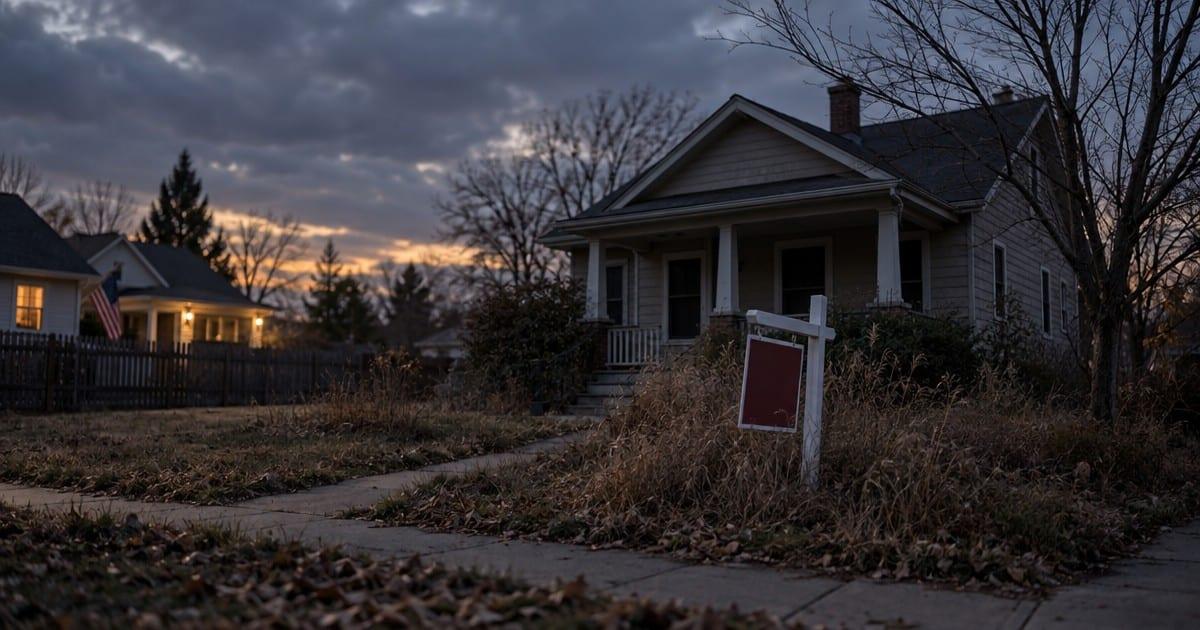
The housing data is just as bleak. The National Association of Realtors reported that its index of pending home sales fell 7.3% from August to 66 in September, the lowest level since the series began in 2001. Contracts dropped across the country, with the West posting the steepest decline at 9.2%.
Social media accounts tracking the Fed flagged the release ahead of time. An Instagram post indexed under the caption "The FOMC minutes are dropping today at 2:00 PM ET" previewed the 2 p.m. Eastern release. A separate post carried the caption "FOMC Minutes in Focus as Dollar Pulls Back," and a third post, dated to an earlier release, described the FOMC minutes publication of October 7, 2026 as its subject.
Bitcoin traded at $82,708 on Wednesday morning, or 73,652 euros, according to a market report, with the 50-day moving average at $81,679 below and the 20-day average at $83,117 above. U.S. spot Bitcoin ETFs took in $526.7 million net on Monday, the largest single-day inflow since September, according to Farside Investors data. The overnight low of $81,273 sat $406 below the 50-day line before price worked back above it, a single breach that triggered no follow-on selling.
The trading range between Tuesday and Wednesday mornings was $1,976, or 2.39% measured against the current level, wider than the three quiet days before it.
What the minutes do not settle is the path beyond October. The document records the committee's September debate; the October 27-28 meeting will be decided on data that did not exist when the members sat down, including the CoreWeave credit event and the September pending-sales collapse. It is not yet known from the published record how individual members weighted those risks, and the minutes do not commit anyone to a October vote.
Our Take
Here is the part the financial press will gloss over. The Fed spent years telling Americans that its models were steering the economy toward a soft landing, and what is actually steering it is a credit event at a single AI cloud company and a housing market so frozen that pending sales are at the lowest reading in the history of the index. That is not a soft landing. That is a bubble losing air while the people who buy houses and hold tech funds eat the loss.
The 84.5% pause probability is the market admitting the tightening cycle is over, not because inflation was beaten, but because the economy cannot take another hike. Working families have watched mortgage rates crush affordability while Washington ran trillion-dollar deficits and the Federal Reserve debated basis points. The housing numbers are the receipt.
And notice who gets bailed out when the AI trade wobbles: Treasury yields fall, safe-haven flows surge, and the same institutional class that chased the bubble gets a softer policy path. The small business owner on Main Street gets no Fed put. The parent who cannot sell a home in the West, down 9.2%, gets no press conference.
Patriots should demand the October minutes show real dissent, real acknowledgment that this economy is running on fumes, and real accountability for the money printers who told us everything was fine. The Fed does not answer to the markets. It answers to We the People, and it is long past time it acted like it.
