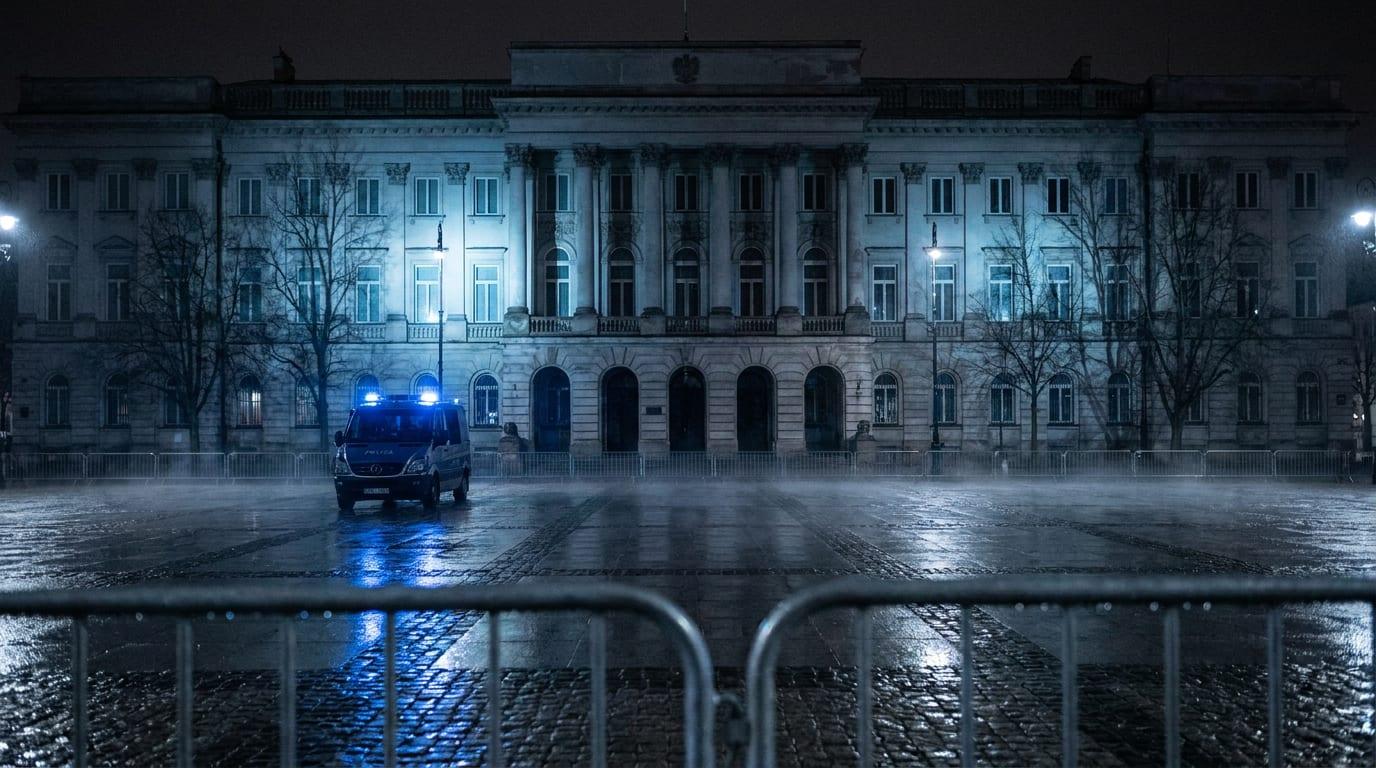
Polish police said Sunday they received information about a possible plot to attack Prime Minister Donald Tusk and Defense Minister Władysław Kosiniak-Kamysz, prompting an emergency meeting of the country's top security services and the arrest of a man in connection with the alleged assassination threat.
Karolina Gałecka, a spokesperson for Poland's Interior Ministry, said police received the warning and that security services, police, and Interior Ministry representatives were scheduled to convene an emergency meeting at 11 a.m. local time (0900 GMT) Sunday, according to the Associated Press. Officials from the police service, the government's protection service (SOP), and the Internal Security Agency (ABW) gathered at the agency's counterterrorism center to discuss the situation, POLITICO reported.
Interior Minister Marcin Kierwiński announced that a man who threatened to attack Tusk has been arrested, according to the AP. The announcement followed the emergency security meeting.
Jacek Dobrzyński, spokesman for the security services, said the threat was first identified by the State Protection Service, which passed the information to police. The information was described as credible, indicating a high probability of an assassination attempt, according to Notes From Poland.
Gałecka confirmed that the threat originated with the State Protection Service and was then relayed to police. Dobrzyński declined to divulge details about the nature of the alleged attack or where the warnings originated, saying further information would be provided once police and security services completed their investigation.
Szłapka indicated that one element of the warning came via email.
At the time of the initial reports, no details had been released regarding where or how the alleged attacks were expected to take place, who might be behind them, or what the source of the information was, according to Notes From Poland.
The alleged plot comes amid heightened security concerns in Poland. Polish authorities were on high alert this week after three school attacks within four days in Mazovia province in central Poland, where Warsaw is located. One of those incidents involved the death of a school caretaker in a knife attack.
In September, Tusk warned about likely intensified hybrid attacks by Russia on NATO's eastern flank. He said Russia was planning strikes with drones or rockets on European countries supporting Ukraine, among them Poland, with the goal of weakening Western support for Kyiv's fight against the Russian invasion. Moscow has denied any such plans.
Poland has been on the frontline of what officials describe as Russia's hybrid war against Ukraine's backers in Europe and has suffered cyberattacks attributed to Moscow. The country has also seen a wave of violent incidents in schools in recent weeks.
The arrests and the emergency security meeting represent a significant escalation in Poland's domestic security posture. The State Protection Service, which provides security for high-ranking officials including the prime minister and defense minister, identified the threat — a detail that underscores the seriousness with which Polish authorities are treating the warning.
Further details on the investigation are expected to be released as the probe continues.
Our Take
Poland sits on the knife's edge of Europe's eastern flank, and this weekend's events show just how dangerous that position has become. An alleged assassination plot against a sitting prime minister and defense minister — credible enough to trigger an emergency meeting of the ABW, SOP, and police at the counterterrorism center — is not a drill. It is a warning shot.
Consider the context. Tusk himself warned in September that Russia was planning strikes on NATO countries supporting Ukraine. Moscow denied it, as Moscow always does. Then three school stabbings in four days. Now an alleged plot to kill the prime minister and defense minister, with a suspect in custody.
Patriots, ask yourselves: when does a pattern stop being a coincidence? Poland has been one of Ukraine's most vocal backers, and it has paid a price — cyberattacks, hybrid warfare, and now this. The Western alliance's support for Kyiv has real costs, and those costs are being paid in Warsaw, not Washington or Paris.
The mainstream media will downplay this. They will tell you it is isolated, that there is no connection to anything larger, that we should not jump to conclusions. But the Polish government's own spokesman said this signal was "more disturbing than previous" ones. That is not nothing. That is a government telling its people something serious is happening.
The arrest is good news. But one arrest does not close the book on a threat network. The question now is whether Polish authorities will get to the bottom of who was behind this — and whether the West will finally take the hybrid war on its eastern flank as seriously as it deserves.
Stay vigilant. Stay armed. Stay free.