
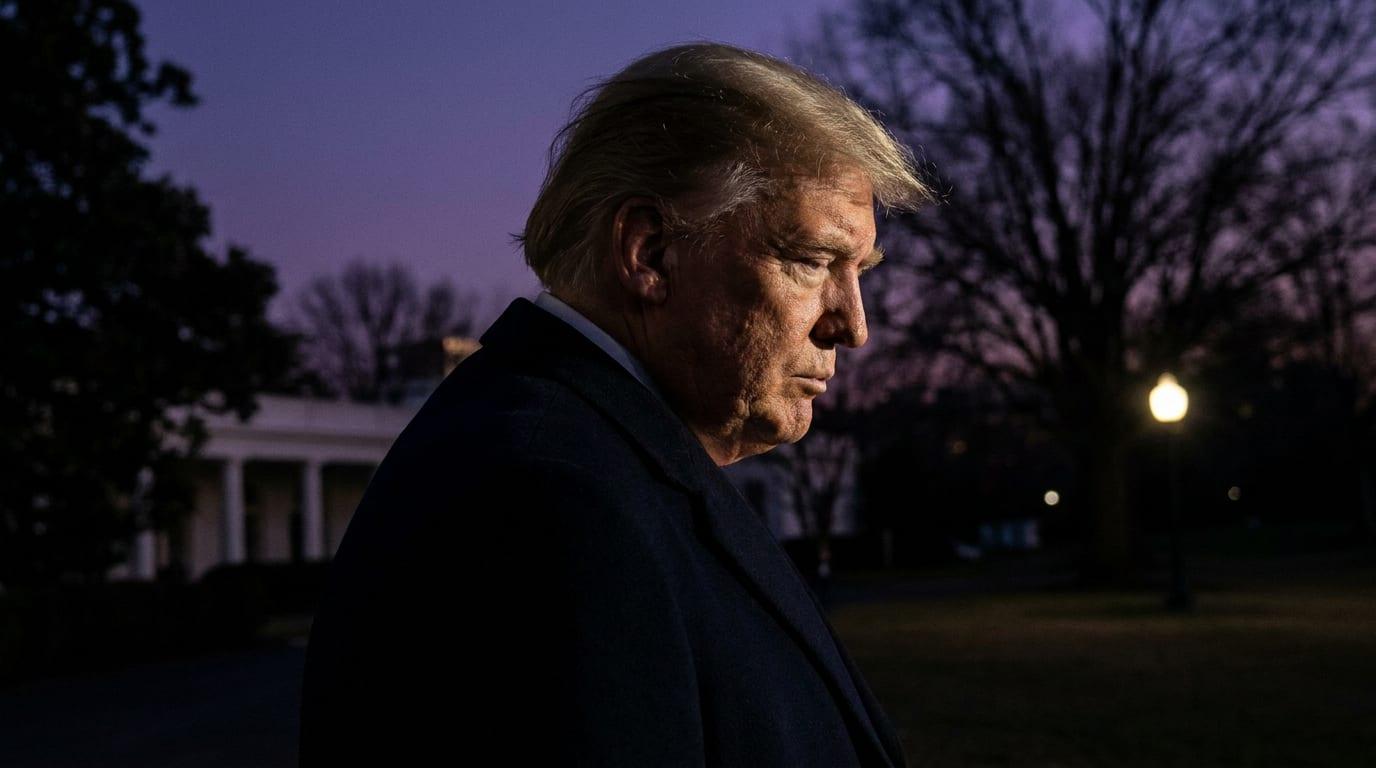
Ukrainian President Volodymyr Zelenskyy said Sunday that Russia alone is responsible for the war in Ukraine and offered to halt strikes on Russian oil refineries if Moscow stopped hitting Ukraine's energy grid, according to ABC News. The offer came hours after President Trump blamed Zelenskyy for high diesel prices, said Ukraine should hold an election, and announced a diesel supply arrangement with Russia.
Zelenskyy made the proposal in a post on X, writing that "Ukraine will be ready to stop striking Russian oil refineries if Russia stops striking our energy infrastructure." He added that "it is possible to stop strikes on energy infrastructure as early as today, but (Russian President Vladimir) Putin does not want to do so," and that any de-escalation must be reciprocal and backed by real guarantees.
The exchange unfolded across a single day, with competing statements from Washington and Kyiv landing within hours of one another.
In an interview with ABC News' "This Week," Zelenskyy said Ukrainians "want peace." "About energy, I said it to President Trump ... to his team and to his people several times. We want peace," he said. "We are ready for ceasefire. We are ready to begin from any kind of steps of de-escalation."
Trump had opened the day by telling Reuters that Zelenskyy "should have an election" and that he "could have settled this thing many times." In remarks carried in a Reuters video transcript, the president said, "He can't raise the price of oil. He's done enough." Trump went on to say the war "should have never happened" and that Zelenskyy "could have solved this war, or he could have made a deal many times."
CBS News reported that Trump had taken aim at Zelenskyy's leadership, suggesting the Ukrainian president should be replaced and holding him responsible for elevated diesel prices, and that Trump announced a diesel supply deal with Russia a day before the ceasefire claim.
Zelenskyy's foreign minister, Andrii Sybiha, responded directly. Writing on X late Saturday, Sybiha said Zelenskyy was leading the country through a war for its independence. "He has the support of the Ukrainian people, and they have the right to decide. Statements from abroad only confirm that he is doing his job well," Sybiha wrote.
By Sunday afternoon, Trump posted again, this time on Truth Social. "Effective immediately, there is an ENERGY CEASEFIRE in the War between Russia and Ukraine. Both parties have agreed. Do not break it! Thank you for your attention to this matter," the post read, according to CBS News. Trump offered no terms, and according to the Associated Press, neither side immediately commented on such an agreement.
Only minutes after the post went up, Zelenskyy told reporters the ceasefire was "news to me," The Independent reported. As of Sunday evening, the arrangement had not been confirmed by either Ukraine or Russia. The AP noted that Russia and Ukraine have repeatedly attacked each other's energy infrastructure throughout the war, and separately reported that Trump's brief post said only that the ceasefire takes effect immediately and that both sides had agreed to it.
While the two presidents traded statements, Ukrainian drones continued striking deep inside Russia. According to reporting carried by ABC News and CBS News, a drone attack on Sunday shut down a data center operated by Russian technology giant Yandex — the third strike on the company's facilities in four days.
The account @visegrad24 described the campaign in a post Sunday morning, saying Ukraine had struck the Yandex data center in Vladimir, Russia, and that drones had now hit three Yandex data centers in four days, including the Sasovo site on October 8, which the post said housed two of Yandex's three artificial intelligence supercomputers.
The same account raised a separate alarm Sunday, pointing to Financial Times reporting that Russia plans to assassinate top executives of Europe's largest defense companies. According to the post, Moscow is aware that a growing share of Ukraine's foreign weaponry comes from Europe and is prepared to use Russian agents embedded on the continent. That claim is attributed to the Financial Times by the account carrying it; it has not been independently confirmed by this outlet, and neither the identity of any targets nor the status of any alleged operation was described.
The flurry of activity drew wide coverage. The Guardian reported Trump's suggestion that Ukraine needs a new leader after the diesel deal with Russia. ABC News, CBS News, the Associated Press and The Independent all reported on the competing statements within hours of one another, and Reuters carried the president's remarks on camera. The accounts tracked here — @ABC, @CBSNews, @Reuters, @CNN and @visegrad24 — are among those carrying the claims to their own audiences, and the underlying events described in those posts are reported as claims, not as established fact.
Trump's push for a Ukrainian election lands amid a war that is more than four and a half years old. According to ABC News and CBS News, Russian and Ukrainian armies remain largely deadlocked along the front line while both sides wage a long-range aerial campaign against energy and industrial targets far from the battlefield. Ukraine's strikes on Russian refineries have drawn the president's ire over diesel prices at home, while Russia's strikes on Ukraine's power grid have left Ukrainian officials seeking reciprocal guarantees before standing down. Zelenskyy's public position Sunday was that the de-escalation could begin immediately if Moscow agreed — and that Moscow has not.
Sybiha's statement was the only formal Ukrainian response to Trump's call for a new president on Sunday, and it did not address the diesel deal directly. The White House did not release terms of the energy ceasefire, and the Kremlin has not commented publicly on it.
Next News Network could not independently verify the claims described in the posts and reports above, including the existence and terms of any energy ceasefire, the status of the diesel supply arrangement, and the Financial Times report on alleged Russian plans against European defense executives.
Our Take
There is a sequencing problem here that no amount of spin can clean up. On Sunday morning, the president of the United States told Reuters that Ukraine's leader should face an election and blamed him for the price of diesel. By the afternoon, that same president announced an energy ceasefire that, by his own account, both parties had already agreed to. By Sunday evening, Ukraine's president was telling reporters the deal was unknown to him. That is not diplomacy. That is a public relations production running ahead of the facts on the ground, and it puts Kyiv in an impossible position — either accept an agreement it never negotiated, or be blamed for breaking it.
The demand for an election deserves the same scrutiny. Ukraine is fighting for its existence, and its constitution governs how leadership changes in wartime. The judgment about who leads Ukraine belongs to Ukrainians, as Foreign Minister Sybiha said plainly. A president in Washington does not get to cast that vote from the Oval Office, and he should not pretend otherwise.
The diesel deal compounds the problem. Announcing an oil-supply arrangement with Moscow and a ceasefire in the same weekend, while Russia bombs Ukraine's power grid and reportedly plots against European defense executives, sends a message to the Kremlin that the West's resolve is for sale. Ukraine's strikes on Russian refineries are one of the few levers Kyiv has left. If Washington wants them to stop, it needs to secure something real in return — verified, reciprocal, and signed by Moscow — rather than a social media post and a demand that Ukraine simply trust it.
