
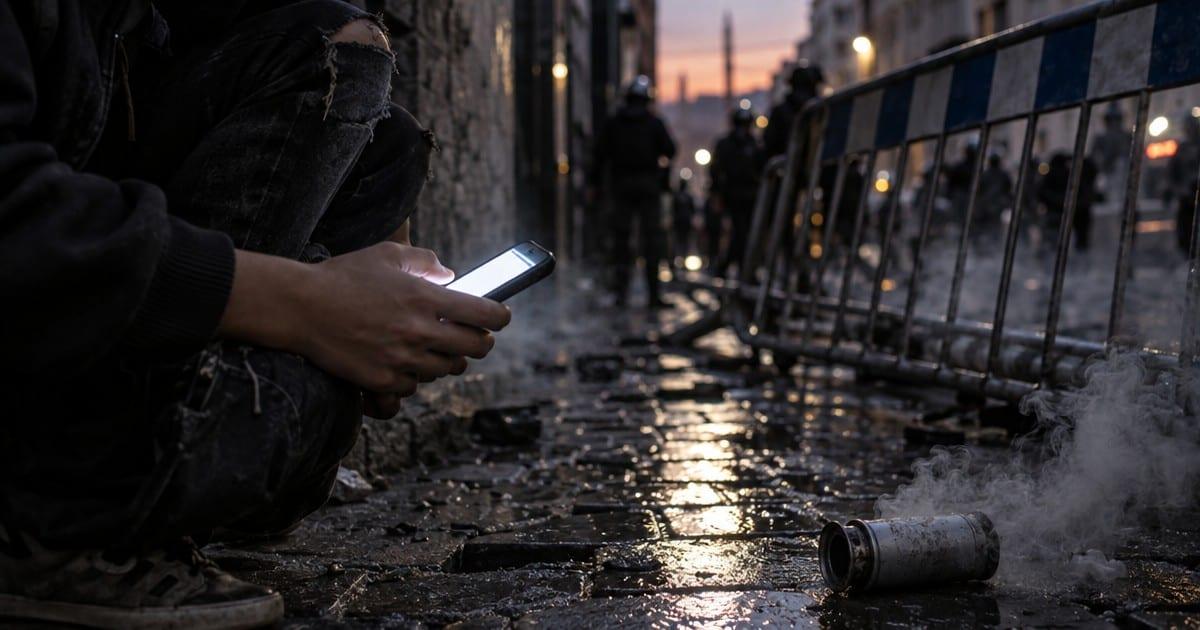
A growing wave of youth-led demonstrations across India has produced an unexpected offshoot: a series of online video games in which players dodge police blockades, build protest processions and even deploy batons and tear gas, according to reporting by Reuters.
One such game, Jantar Mantar Chalo — Hindi for "Let's go to Jantar Mantar" — is a web-based game inspired by the challenge of reaching Delhi's main protest site amid police blockades, road closures and transport disruption, Reuters reported. The game was developed by Suraj Kushwa, a twenty-seven-year-old IT professional, and was released on October 14. Kushwa said at least two thousand people had been playing at any point in time since its release, according to Reuters.
Kushwa described the game, in which players can switch sides to deploy batons and tear gas, as dark humor.
The same approach appears in another protest-inspired game, Bag Neha Bag — or Run Neha Run — which turns activist Neha Bora into the star of a retro-style platform game, Reuters reported.
"We as artists have always believed that satire is the most powerful way to talk about serious things," an artist involved said, according to Reuters. "That's how the birth of CGV also happened."
Reuters described the trend as part of a broader shift in how young Indians express dissent — moving beyond the streets and into games, memes and other forms of online satire. Research scholar Love Creek Singh told Reuters the growing crop of online games are a response to restrictions. "They can prevent people from gathering or ban social media," Singh said. "But dissent will still be shown through art, from music and paintings to games. There are many creative ways that they use."
Political activist Yajendra Yadav argued that satire has long been a powerful political tool. "All over the world dictators are called tyrants. It makes no difference to them. They laugh at it," Yadav said, according to Reuters. "But when you say you are a Joker, they can't take it. All over the world, humor, satire, memes, jokes, songs have been more impactful against authoritarian regimes."
The demonstrations themselves are said to concern jobs, exam paper leaks and a voter-roll revision that activists and opposition parties allege helped the BJP win several recent state elections. The BJP government and electoral commission have denied the allegations, with the ruling party saying the wins came from Modi's popularity and economic growth, according to Reuters.
Reuters reported that tens of thousands of security personnel have been deployed to stop the protests, and that the government has previously cracked down partially on pockets of dissent. Police have denied allegations that they beat up people at the demonstrations.
According to Reuters, the Gen Z style of expression poses an unusual challenge for Prime Minister Narendra Modi. After the so-called cockroach movement forced the resignation of the Education Minister in July, Modi intensified his own outreach to younger Indians through self-shot Instagram videos. But analysts say the protest movement coming from a generation raised on Instagram has countered the ruling BJP everywhere, Reuters reported.
The story has drawn attention from other outlets as well. The New York Times reported that leaders of India's governing coalition are trying to frame the demonstrations as a power grab by traditional political parties rather than a grass-roots youth movement. Historian and novelist Mukul Kesavan, in a separate Q&A, said Modi's "aura of menace and authority has dissipated." Other coverage has focused on the women powering the protests, who face online harassment and police detentions while taking to the streets in large numbers.
Next News Network could not independently verify the claims underlying the demonstrations or the details reported about the protests.
Our Take
The emergence of protest-themed video games as a form of political expression is a phenomenon worth watching, and it raises familiar questions about the line between satire and incitement. What Reuters describes is a generation that has learned to weaponize humor against institutions it cannot confront directly — and the government's response will say much about how far it is willing to go to police expression itself. The reporting attributes the underlying grievances to activists and opposition parties, and the government has denied the central allegations. American readers should recognize the pattern: when street demonstrations are restricted, dissent moves online, and when satire becomes the primary vehicle for political frustration, it is often because more conventional channels are perceived as closed. Whether these games are harmless dark humor or something more consequential is a question the Indian government will have to answer — and how it answers will tell us a great deal about the health of the country's democratic debate.
