
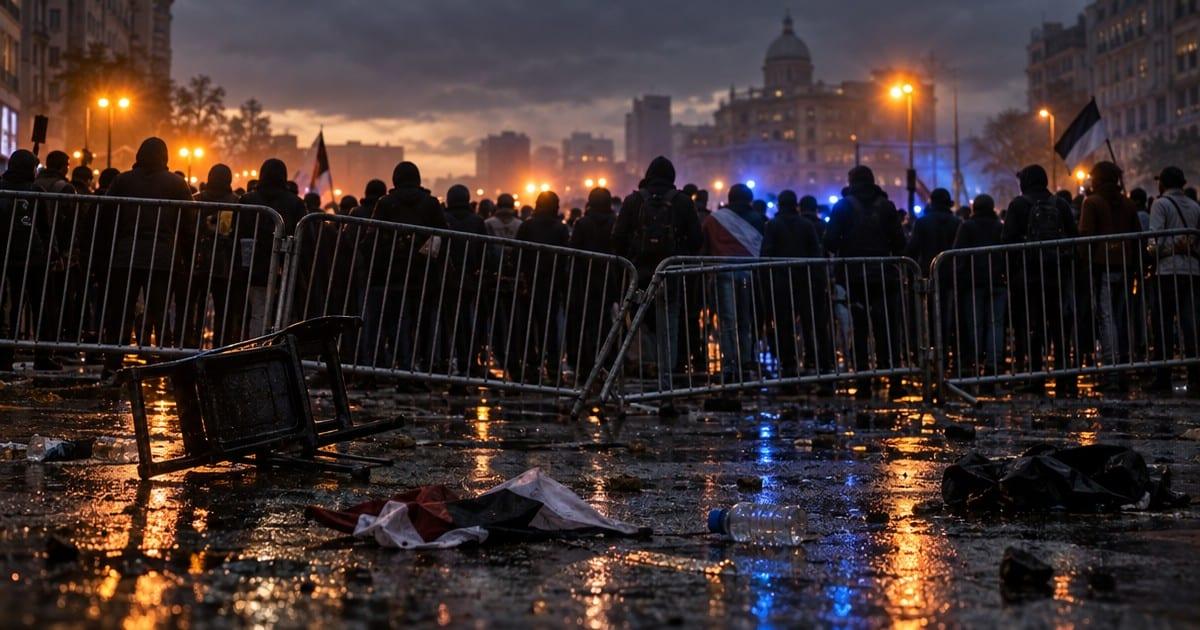
United Nations human rights experts are calling on Indian authorities to stop using what they describe as excessive force against protesters and to permit an independent investigation into the conduct of Indian security personnel, according to a statement carried Tuesday by Reuters and picked up within hours by outlets across three continents.
The Reuters report, published by the wire service's main account, which has twenty-six point four million followers, summarized the experts' demand in a single line: that Indian authorities cease the use of excessive force to curb protests. The wire item did not identify which specific expert body issued the call, and the demand as relayed did not specify which protests or which incidents prompted it.
The Hindu, reporting roughly nineteen hours before the Reuters item moved, framed the intervention more broadly, saying the UN experts had urged India to protect peaceful protests and had condemned excessive force and detentions amid student demonstrations and allegations of rights abuses. That account said the experts characterized police actions against protesters as a violation of India's core international legal obligations.
Al Jazeera's coverage, published about five hours after the Reuters item, added a specific demand that the earlier wire summary did not carry: that the experts are pressing for an independent investigation into the conduct of Indian authorities. A separate headline circulating Tuesday, attributed to coverage of the same subject, said the experts had condemned India over excessive force against peaceful student protesters and had called for investigations into reported abuses.
The reach of the reaction was immediate and wide. US News, the rankings and news publisher, carried the Reuters formulation. Arab News ran the same headline. Al Jazeera's protests desk gave it its own treatment with the added investigation demand. The Hindu led with the international legal obligations language. A further headline circulating Tuesday shifted the emphasis again, describing the subject as violence against student protesters rather than excessive force alone.
The spread matters because the underlying events the experts are describing have not been independently confirmed. The experts' statement, as relayed across these outlets, is a claim about conduct by Indian authorities. It is a characterization of police behavior and of demonstrations, and it is being reported as what the experts are alleging, not as an established account of what took place. The specific locations, dates and casualty figures, if any exist, are not carried in the coverage summarized here, and this outlet is not asserting that the events the experts describe occurred as described.
What is confirmed is the reaction itself: a UN expert body issued a statement, and by Tuesday afternoon it had been relayed by a major wire service, a Qatar-based broadcaster, a Saudi-owned pan-Arab daily, an Indian national newspaper and a US news publisher. That is a substantial echo for a single statement, and it places the experts' characterization in front of audiences in North America, Europe, the Middle East and South Asia within a single news cycle.
The substance of what the experts are asking for is twofold. First, that Indian authorities stop using force that the experts classify as excessive when policing protests. Second, per Al Jazeera's account, that an independent investigation examine the conduct of Indian authorities. The Hindu's account adds the framing that police actions on protesters violate India's core international legal obligations, a legal characterization the experts are asserting rather than a finding by any court.
Indian authorities have not responded in the coverage summarized here. No statement from a Indian government spokesperson, no response from a state police force and no rebuttal from any official named in the reporting appears in these accounts. The coverage consists of the experts' demands and the outlets' relay of them.
The story also illustrates how a single expert statement travels. The Reuters wire account, with its twenty-six point four million followers, pushed the headline in its barest form. Al Jazeera then added the investigation demand. The Hindu added the legal obligations framing and the student protest context. The result is a cluster of headlines that read as variations on one sentence but carry materially different specifics depending on which outlet a reader encounters first.
Next News Network could not independently verify the allegations of excessive force, the reported detentions, or the existence and scope of the student demonstrations referenced in the coverage.
What remains undisputed in the material is the sequence: experts issued a call, a wire service moved it, broadcasters and newspapers amplified it, and the demand for an independent investigation is now part of the public record of the episode. Whether Indian authorities will act on any of it is not addressed in the reporting.
Readers encountering the headline in one outlet should note the differences between them. The Reuters line is the narrowest. Al Jazeera's is the most specific about the remedy sought. The Hindu's is the broadest in its legal claim. The US News and Arab News versions track the wire. None of them, as summarized here, identifies the individual experts by name or quotes them directly.
Our Take
The pattern here is familiar: a UN expert body issues a statement full of legal characterization, a wire service reduces it to a headline, and within hours the same sentence is appearing under the logos of outlets on three continents as though a finding had been handed down. It has not. What the experts are offering is an allegation dressed in the language of international law, and the outlets relaying it are doing very little to distinguish between the two. Note also what the coverage leaves out. The wire summary does not say which protests, which incidents, which units or which dates. Al Jazeera adds a call for an independent investigation without saying what would be investigated. The Hindu invokes core international legal obligations without naming the treaty provision or the body that would enforce it. A reader who encounters only the Reuters line learns that experts are upset about something in India and nothing more. That is not reporting; it is a press release with a dateline. The Indian government, whatever one thinks of its policing, deserves the chance to answer specific charges rather than a floating characterization, and the American reader deserves to know that the demand for an investigation is being made by people who have not, in any of this coverage, laid out the evidence for it. Until they do, this is a claim, and it should be labeled as one every time it is printed.
